IQ (Intelligence Quotient) is a numerical score derived from standardized tests that measures an individual’s intellectual abilities.
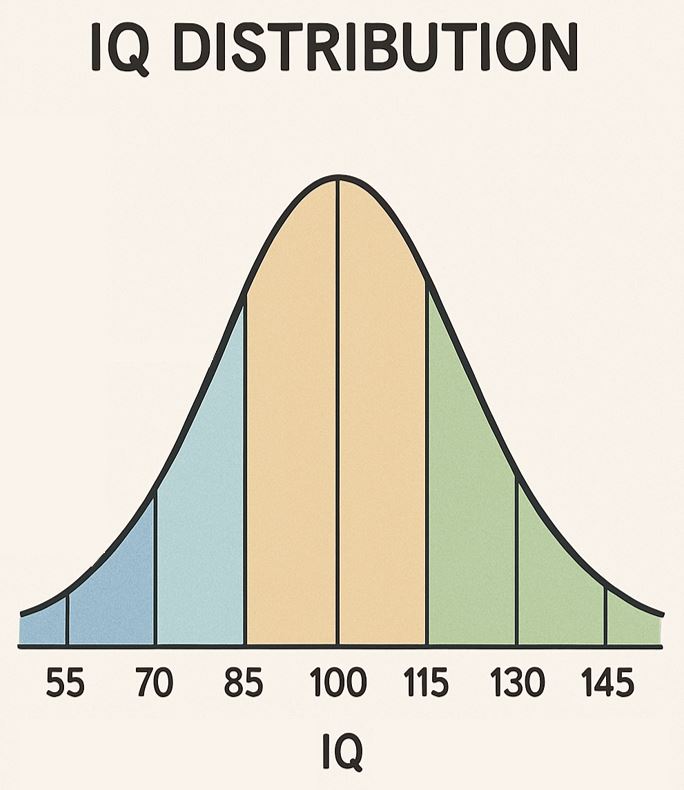
IQ is typically calculated by taking a standardized intelligence test (such as the Wechsler Adult Intelligence Scale), based on a normal distribution using the average score for one’s age group. The average is set at 100, with a standard deviation of around 15, showing where you fall within that distribution. In other words, IQ represents how your intelligence compares to that of your peer age group.
Key characteristics of IQ:
- A higher score indicates higher intelligence (relative to the same age group)
- Generally, 85-115 is considered “average,” and 130 or above is considered “very high”
- It evaluates only certain aspects of intelligence (such as logical thinking, memory, and reasoning), and does not reflect every ability, such as creativity or emotional sensitivity
- It has some predictive power and is often related to aptitude for learning or occupations, but some critics argue it does not fully represent a person’s overall intelligence
In recent years, it has also been pointed out that motivation and emotional factors can influence the score, making it difficult to describe a person’s overall intelligence based on IQ alone.
Want to test your reasoning ability?
Take the free WIQS Pretest.